

Commercial Disruption Alert - 10 Sept 2026 - East Asian Ports
Repeated typhoons disrupt East Asian ports, delaying vessels and weakening schedule reliability.
Repeated typhoons disrupt East Asian ports, delaying vessels and weakening schedule reliability.

Mundra strike ends, but container backlogs and logistics disruption may persist temporarily.
Dover protest blockades expose freight vulnerability across critical UK Channel port access
Topic
Analysis, reports and commentary from Power & Corridors connected to this topic.

From Barentsburg to Severomorsk, surveillance, submarines and undersea infrastructure are converging around one of the North Atlantic’s least understood strategic passages

The passage of Chinese-owned tankers through Bab el-Mandeb suggests that political identity, cargo declarations and direct clearance are becoming part of an informal maritime access system.

At 90, the Montreux Convention remains the legal architecture behind Türkiye’s maritime power—and a constraint on both Russia and NATO.

Georgia’s strategic role in the Middle Corridor is evolving amid shifting geopolitics.

The US Navy spent years testing unmanned systems in Middle Eastern waters. The attack on Iran’s submarine facilities showed what that experimentation was preparing to deliver.

ASTRA offers strategic redundancy beyond Hormuz and Bab el-Mandeb through Arabian Sea connectivity.

China’s scheduled Arctic service transforms seasonal access into a developing logistics network.
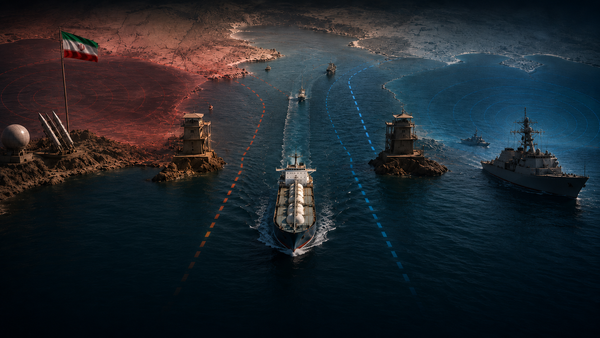
Hormuz remains open, but control, revenue and authority are now contested.

Weaponising Hormuz accelerates alternative corridors, gradually eroding Iran’s greatest strategic leverage.

IMEC’s future depends on resilient networks, not one vulnerable trade route.

China’s Arctic presence is shifting from scientific access to strategic influence.

Middle Corridor gains importance as trade routes diversify across Central Asia, Caucasus and Europe.