

Commercial Disruption Alert - 10 Sept 2026 - East Asian Ports
Repeated typhoons disrupt East Asian ports, delaying vessels and weakening schedule reliability.
Repeated typhoons disrupt East Asian ports, delaying vessels and weakening schedule reliability.

Mundra strike ends, but container backlogs and logistics disruption may persist temporarily.
Dover protest blockades expose freight vulnerability across critical UK Channel port access
Topic
Analysis, reports and commentary from Power & Corridors connected to this topic.

A Russian research vessel was not seized for sanctions violations. Its detention in Svalbard points to a different maritime risk: ships becoming recoverable assets in the enforcement of international judgments.
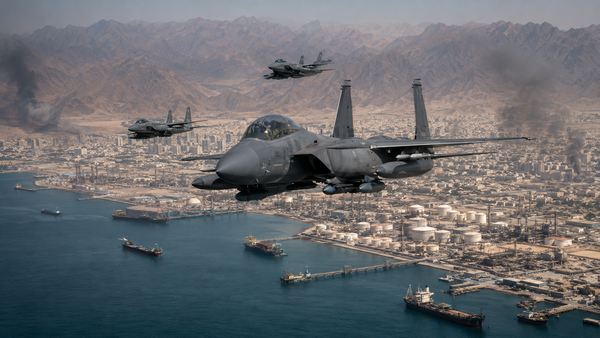
US strikes across southern Iran raise risks to Hormuz shipping and trade.

The boarding of the tanker SUN shows why following maritime movement is no longer enough. Increasingly, analysts also need to establish whether the legal identity moving across the map is real.

Hormuz disruption is widening into a broader regional maritime and security risk.

UAE Air Force Responds to UAV Approaching from Iran as Regional Escalation Widens

US strikes and Iranian retaliation raise maritime and regional escalation risks around Hormuz.

As Europe and North America scrutinise Chinese involvement in strategic infrastructure, CMA CGM's new partnership with CCCC points towards a more complicated future: not global decoupling, but the geographic fragmentation of port and logistics investment.

Maritime anomalies reveal how vessel behaviour increasingly exposes sanctions evasion, trafficking, surveillance and strategic coercion.

Restoring Yemen’s western coastline could constrain Houthi maritime coercion and weaken Iran’s double-chokepoint regional leverage.

Complementing MEIS analysis, this examines how energy redundancy shifts risk across wider maritime corridors.

Makkah links collective defence with trade corridors, infrastructure, industry and regional power.

Energy security requires strategic redundancy, diversified corridors and shared infrastructure to withstand interconnected maritime disruption.