

Commercial Disruption Alert - 10 Sept 2026 - East Asian Ports
Repeated typhoons disrupt East Asian ports, delaying vessels and weakening schedule reliability.
Repeated typhoons disrupt East Asian ports, delaying vessels and weakening schedule reliability.

Mundra strike ends, but container backlogs and logistics disruption may persist temporarily.
Dover protest blockades expose freight vulnerability across critical UK Channel port access
Selected essays, reading notes and strategic analysis on geopolitics, maritime power, trade corridors, infrastructure, energy and global risk.
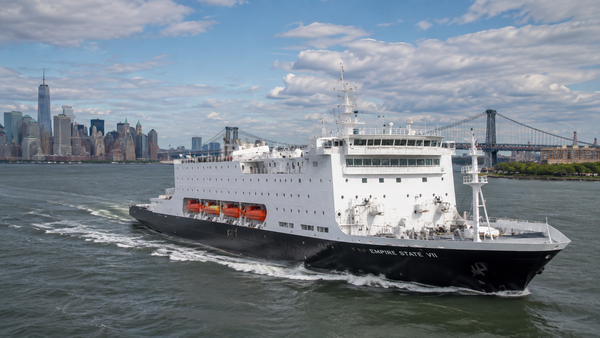
US activates civilian maritime academy ship for classified mission, raising questions over logistics capacity and purpose.

The boarding of the tanker SUN shows why following maritime movement is no longer enough. Increasingly, analysts also need to establish whether the legal identity moving across the map is real.

As Europe and North America scrutinise Chinese involvement in strategic infrastructure, CMA CGM's new partnership with CCCC points towards a more complicated future: not global decoupling, but the geographic fragmentation of port and logistics investment.

Maritime anomalies reveal how vessel behaviour increasingly exposes sanctions evasion, trafficking, surveillance and strategic coercion.

MSC’s investment in next-generation freighters, foreign carriers’ reluctance to return to the Gulf and Emirates’ rapid expansion reveal how disruption is redrawing the global freight network.

At 90, the Montreux Convention remains the legal architecture behind Türkiye’s maritime power—and a constraint on both Russia and NATO.

The US Navy spent years testing unmanned systems in Middle Eastern waters. The attack on Iran’s submarine facilities showed what that experimentation was preparing to deliver.

ASTRA offers strategic redundancy beyond Hormuz and Bab el-Mandeb through Arabian Sea connectivity.

China’s scheduled Arctic service transforms seasonal access into a developing logistics network.

China’s Arctic presence is shifting from scientific access to strategic influence.

Middle Corridor gains importance as trade routes diversify across Central Asia, Caucasus and Europe.

Canada must build strategic corridors, not simply surrender to US economic gravity.

As El Niño risk returns, Panama is trying to secure the canal’s future. But the fight over the Rio Indio reservoir shows that global trade resilience may come at a local human cost.

DP World’s Corpus Christi move signals Gulf logistics capital returning to strategic US port infrastructure.

Coast guards now shape Indo-Pacific power before navies enter the fight.

Hormuz may reopen, but nuclear, proxy and maritime risks remain unresolved.

Hormuz is becoming a live testbed for drones, sea robots, and escalation.

Mines do not need to sink ships to change the balance in the Strait of Hormuz. They only need to create enough uncertainty that traffic slows, insurers hesitate, naval escorts are diverted and energy markets start pricing risk into the route. That is why the current mine-clearance mission is

Canada needs Arctic statecraft integrating infrastructure, defence development, industry, and realistic limits.

Trump’s dealmaking freezes war, preserves leverage, but deepens instability, distrust, and global costs.