

Commercial Disruption Alert - 10 Sept 2026 - East Asian Ports
Repeated typhoons disrupt East Asian ports, delaying vessels and weakening schedule reliability.
Repeated typhoons disrupt East Asian ports, delaying vessels and weakening schedule reliability.

Mundra strike ends, but container backlogs and logistics disruption may persist temporarily.
Dover protest blockades expose freight vulnerability across critical UK Channel port access
Long-form analysis on geopolitics, maritime security, trade corridors, energy, infrastructure and business risk.

Samsung’s CMA CGM claim highlights expanding carrier liability across increasingly integrated global logistics chains.

Bharat Container Shipping Line is part of a wider push into shipbuilding, container manufacturing and inland logistics.

Why an obscure law of naval warfare could reshape sanctions, shadow fleets and maritime ownership

New Delhi is trying to bring transhipment cargo back to Indian ports. Galathea Bay, Vizhinjam and a new national container line suggest India is also trying to gain greater influence over the infrastructure, vessels and networks through which that cargo moves.
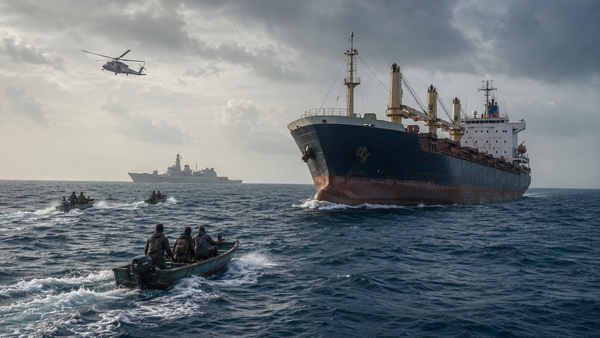
Somali piracy’s resurgence is drawing navies back into sustained counter-piracy operations and surveillance.

A Russian research vessel was not seized for sanctions violations. Its detention in Svalbard points to a different maritime risk: ships becoming recoverable assets in the enforcement of international judgments.
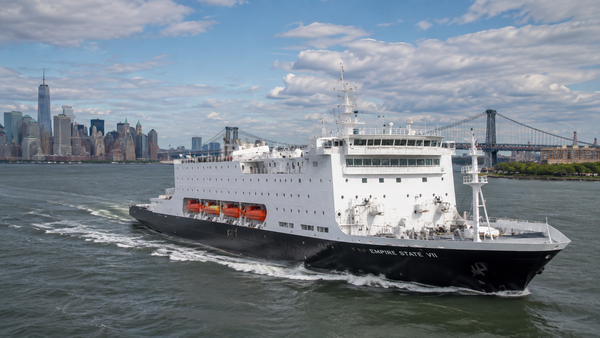
US activates civilian maritime academy ship for classified mission, raising questions over logistics capacity and purpose.

The boarding of the tanker SUN shows why following maritime movement is no longer enough. Increasingly, analysts also need to establish whether the legal identity moving across the map is real.

As Europe and North America scrutinise Chinese involvement in strategic infrastructure, CMA CGM's new partnership with CCCC points towards a more complicated future: not global decoupling, but the geographic fragmentation of port and logistics investment.

Maritime anomalies reveal how vessel behaviour increasingly exposes sanctions evasion, trafficking, surveillance and strategic coercion.

Restoring Yemen’s western coastline could constrain Houthi maritime coercion and weaken Iran’s double-chokepoint regional leverage.

Complementing MEIS analysis, this examines how energy redundancy shifts risk across wider maritime corridors.

Somali piracy expands offshore as hijackings, motherships and hostage-taking intensify across region.

Container shipping has added ships. The harder problem is increasingly what happens when they reach land

Makkah links collective defence with trade corridors, infrastructure, industry and regional power.

Tim Clark’s call for manufacturers to establish operations in Dubai reflects a broader UAE strategy to localise aircraft production, expand maintenance capacity and strengthen the aviation systems supporting trade, food security and economic growth.

Energy security requires strategic redundancy, diversified corridors and shared infrastructure to withstand interconnected maritime disruption.

MSC’s investment in next-generation freighters, foreign carriers’ reluctance to return to the Gulf and Emirates’ rapid expansion reveal how disruption is redrawing the global freight network.

The passage of Chinese-owned tankers through Bab el-Mandeb suggests that political identity, cargo declarations and direct clearance are becoming part of an informal maritime access system.

China’s scheduled Arctic service transforms seasonal access into a developing logistics network.
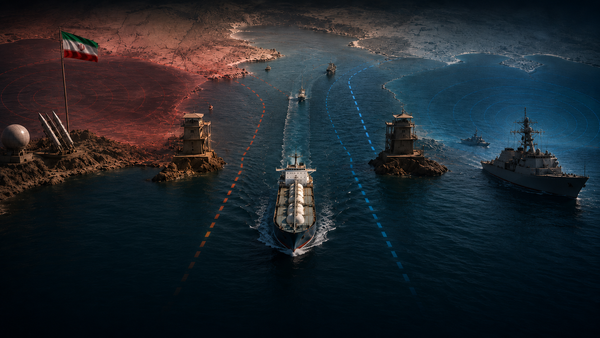
Hormuz remains open, but control, revenue and authority are now contested.

Weaponising Hormuz accelerates alternative corridors, gradually eroding Iran’s greatest strategic leverage.

IMEC’s future depends on resilient networks, not one vulnerable trade route.

Jones Act waivers expose America’s deeper maritime capacity and shipbuilding weakness.