

Commercial Disruption Alert - 10 Sept 2026 - East Asian Ports
Repeated typhoons disrupt East Asian ports, delaying vessels and weakening schedule reliability.
Repeated typhoons disrupt East Asian ports, delaying vessels and weakening schedule reliability.

Mundra strike ends, but container backlogs and logistics disruption may persist temporarily.
Dover protest blockades expose freight vulnerability across critical UK Channel port access
Topic
Analysis, reports and commentary from Power & Corridors connected to this topic.

From Barentsburg to Severomorsk, surveillance, submarines and undersea infrastructure are converging around one of the North Atlantic’s least understood strategic passages

The US Navy spent years testing unmanned systems in Middle Eastern waters. The attack on Iran’s submarine facilities showed what that experimentation was preparing to deliver.
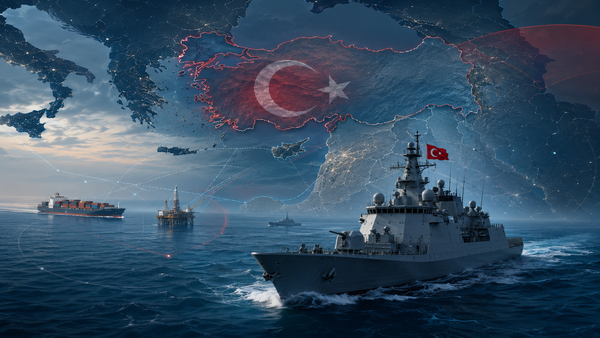
Türkiye’s Blue Homeland doctrine turns maritime geography into strategic power projection.

Hormuz may reopen, but nuclear, proxy and maritime risks remain unresolved.

Canada should diversify defence partners and build sovereign industrial capacity at home.

Hormuz is becoming a live testbed for drones, sea robots, and escalation.

A gold mine with wider significance Canada’s Arctic has long been defined by distance, high operating costs and a lack of infrastructure. However, Agnico Eagle’s decision to revive the Hope Bay gold project in Nunavut shows how this calculation is beginning to change. On 19 May 2026, the

The return of private maritime security is not only an anti-piracy story. It is a warning that the state’s monopoly over force at sea is being reworked through contracts, floating armouries, weapons licences, insurance demands and commercial risk management.

Canada needs Arctic statecraft integrating infrastructure, defence development, industry, and realistic limits.

Maritime insecurity is widening from piracy and armed robbery to state seizures, military strikes, narcotics interdiction and chokepoint coercion

Trump’s dealmaking freezes war, preserves leverage, but deepens instability, distrust, and global costs.

Modern warfare rewards resilience, adaptation, and layered defence, not merely expensive platforms or superpower status.